
High-Pressure Laminate (HPL) Rainscreen Panels in Washington, DC
Lightweight, color-stable and made for crisp open-joint façades. We install exterior-grade HPL rainscreen panels across DC, Maryland and Virginia — a versatile, low-maintenance way to get wood, stone or solid-color looks at a manageable weight and budget.
What HPL is
High-pressure laminate is built from layers of cellulose fiber saturated with thermosetting resins and a decorative surface, fused under high heat and pressure into a single dense, solid panel. Exterior-grade HPL adds a weather- and UV-resistant surface, so the finish that looks good on day one still looks good after years of Mid-Atlantic sun and rain.
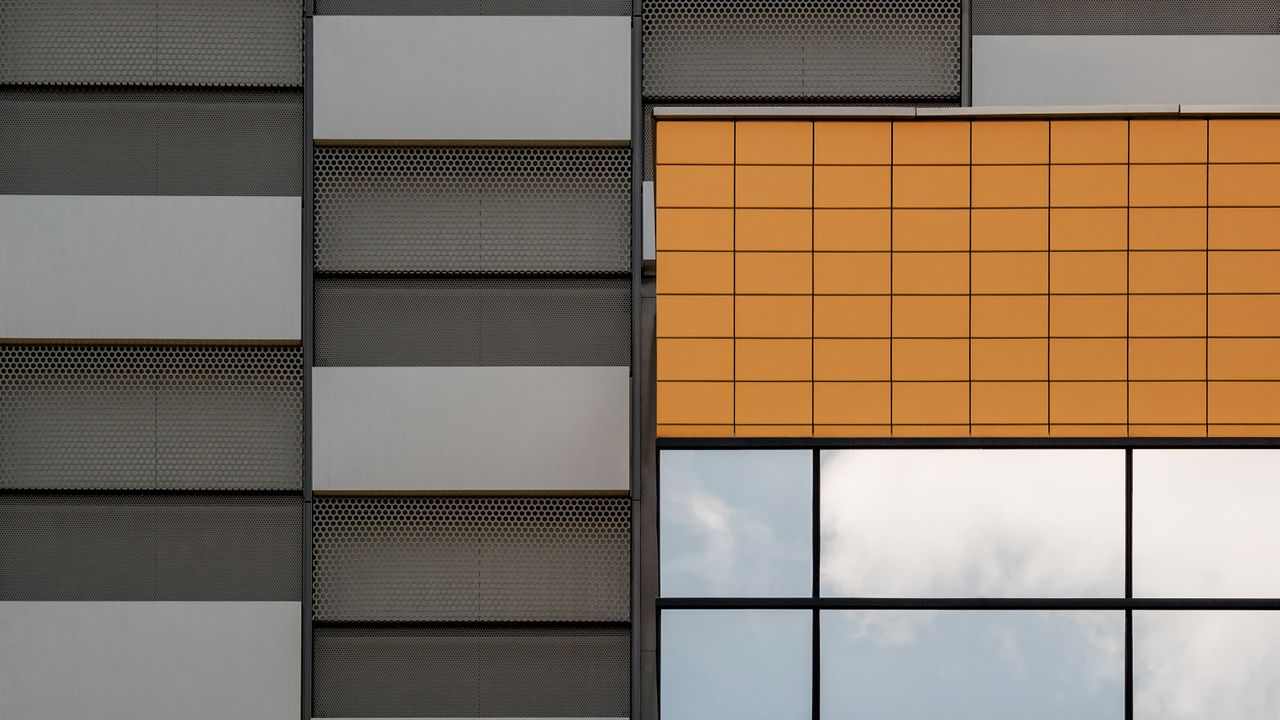
Its strengths are versatility and weight. HPL is thin, flat and dimensionally stable, easy to fabricate to tight tolerances, and offered in a wide palette — convincing wood grains, solid colors, stone and metallic looks, in matte or textured surfaces. That makes it a natural choice for the clean, gridded open-joint façades common on contemporary mixed-use, education and multifamily buildings.
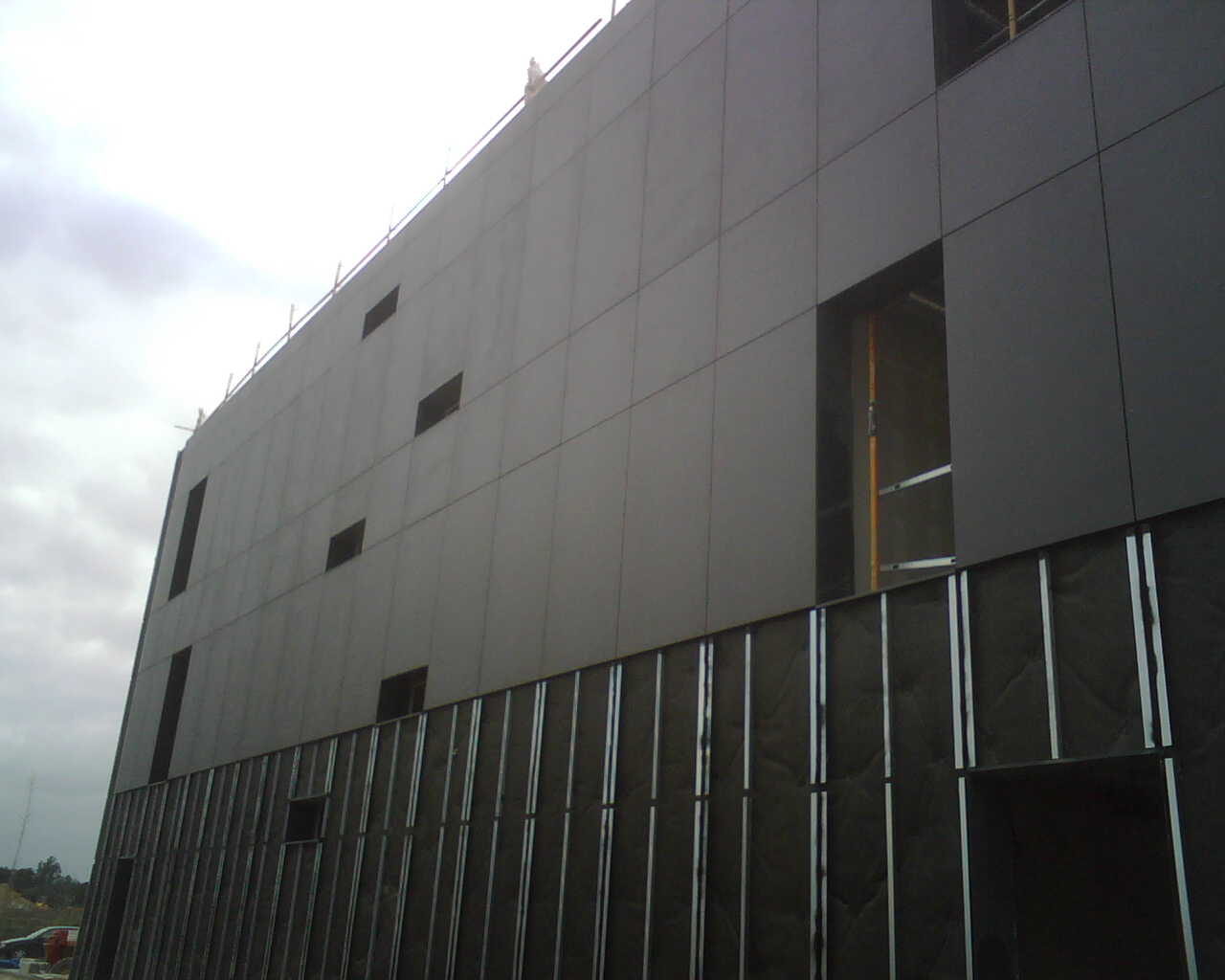
Installed as a rainscreen, HPL hangs on a sub-frame over a ventilated, drained cavity, continuous insulation and a continuous weather-resistive barrier — so the lightweight panel performs as part of a complete, drying assembly.
How HPL fits in the wall assembly
The panel is layer one — the visible screen. Hover or tap a number to see what sits behind it.
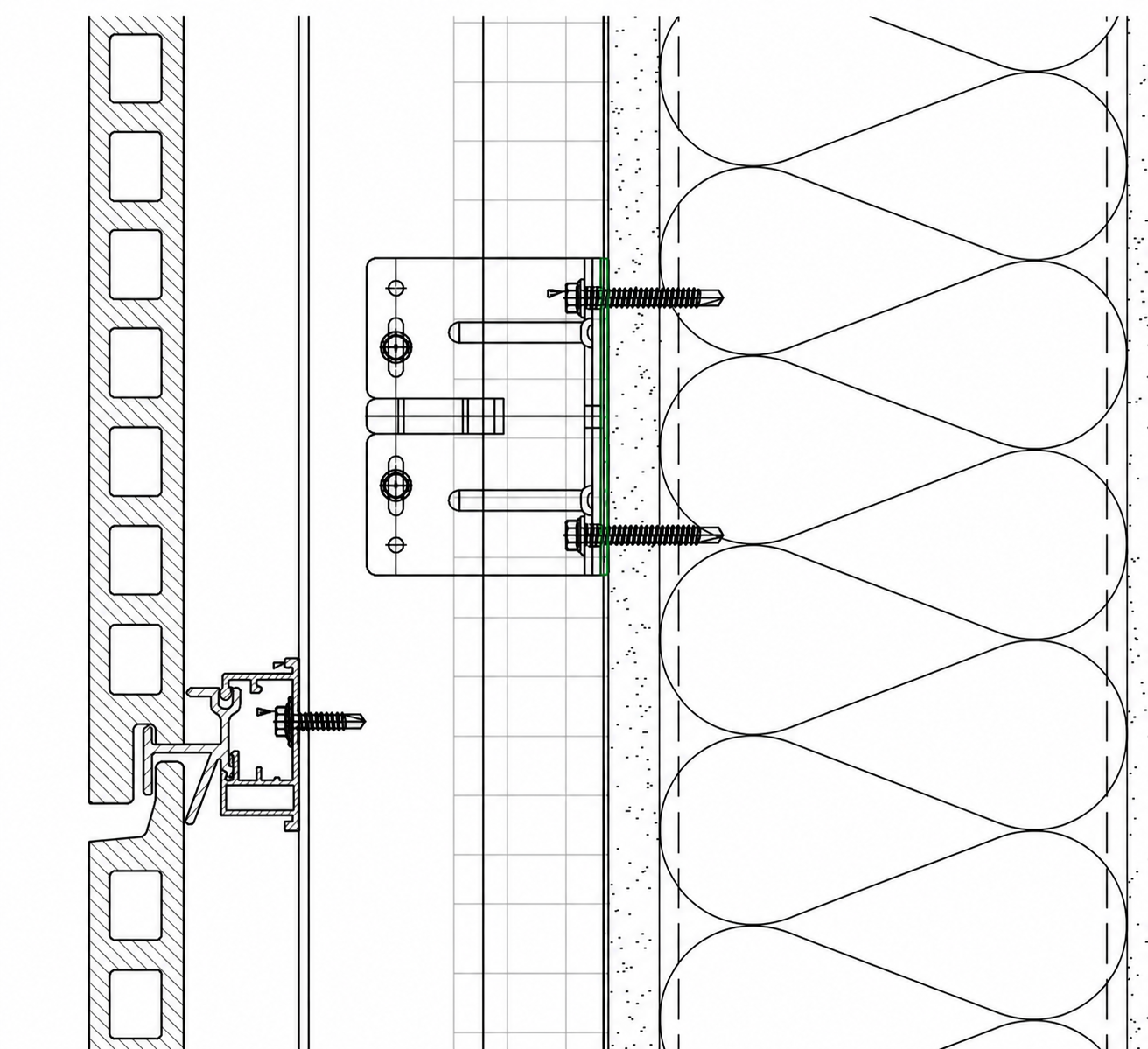
Fig. 01 — HPL rainscreen assembly
Why specify HPL
Three reasons HPL keeps showing up on contemporary DMV façades.
Light, versatile, easy to detail
Thin, flat and dimensionally stable, HPL fabricates to tight tolerances and hangs cleanly — ideal for the crisp open-joint layouts modern buildings ask for.
UV-stable finishes
Exterior-grade surfaces resist fading and weathering, holding wood grains, solid colors and stone looks through years of Mid-Atlantic sun and rain.
Low maintenance
The sealed surface cleans easily and shrugs off moisture, and the ventilated cavity keeps the panel drying — so maintenance stays minimal.
Finishes & systems we install
Our installation process
How an HPL rainscreen goes up — from coordination to closeout.
- Survey & shop drawings
We measure the wall, coordinate with the architect and other trades, and produce panel layouts and detailing for transitions, openings and terminations.
- Weather-resistive barrier & flashing
The continuous WRB and all flashings at windows, parapets and penetrations go on first — the line that genuinely keeps water out.
- Continuous insulation & sub-framing
Exterior insulation and the rainscreen sub-frame establish the ventilated, drained cavity at the correct depth.
- Panel installation
HPL panels are cut to layout and fixed with concealed or color-matched exposed fasteners, holding consistent reveals across the grid.
- Detailing & closeout
Edges, corners and terminations are finished, the cavity ventilation paths are confirmed clear, and the wall is inspected and documented.
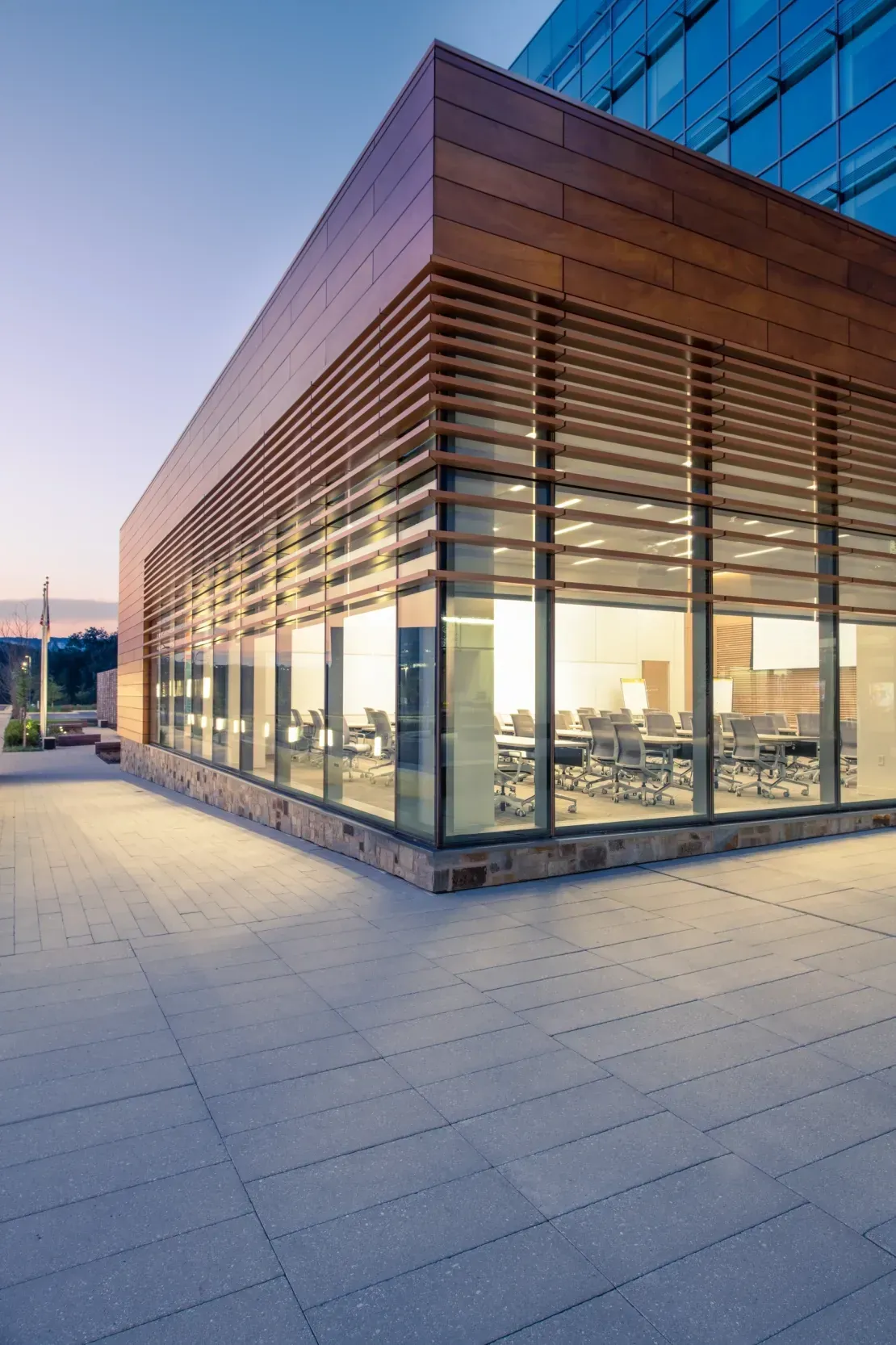
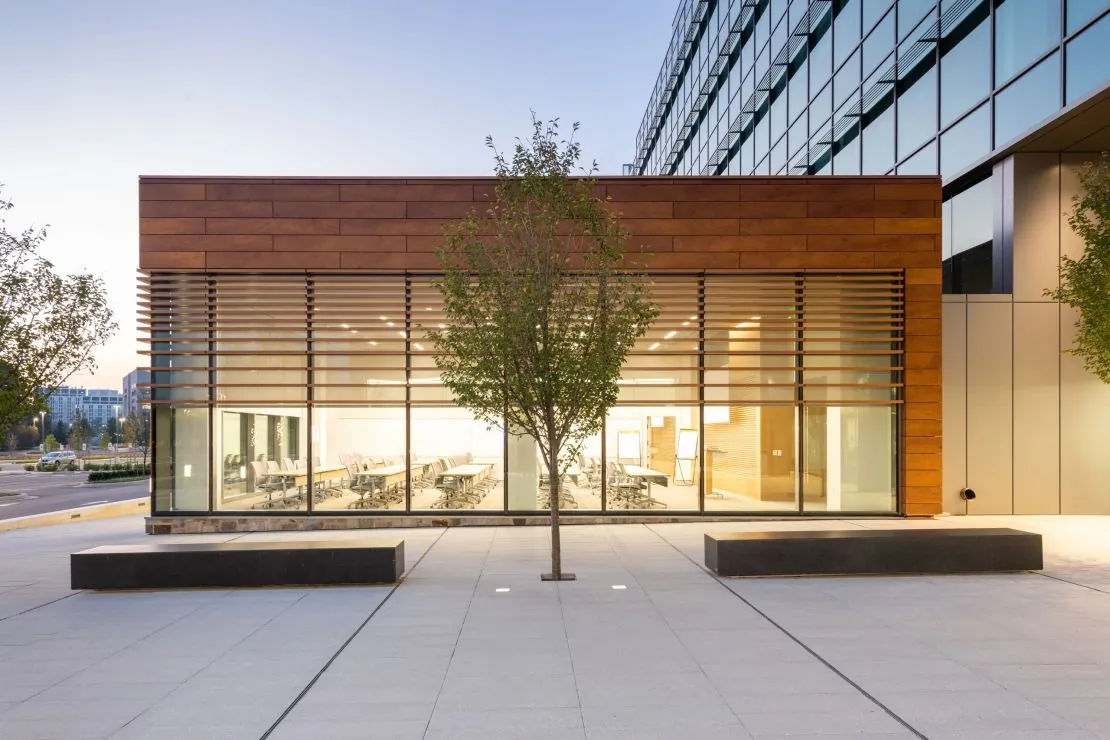
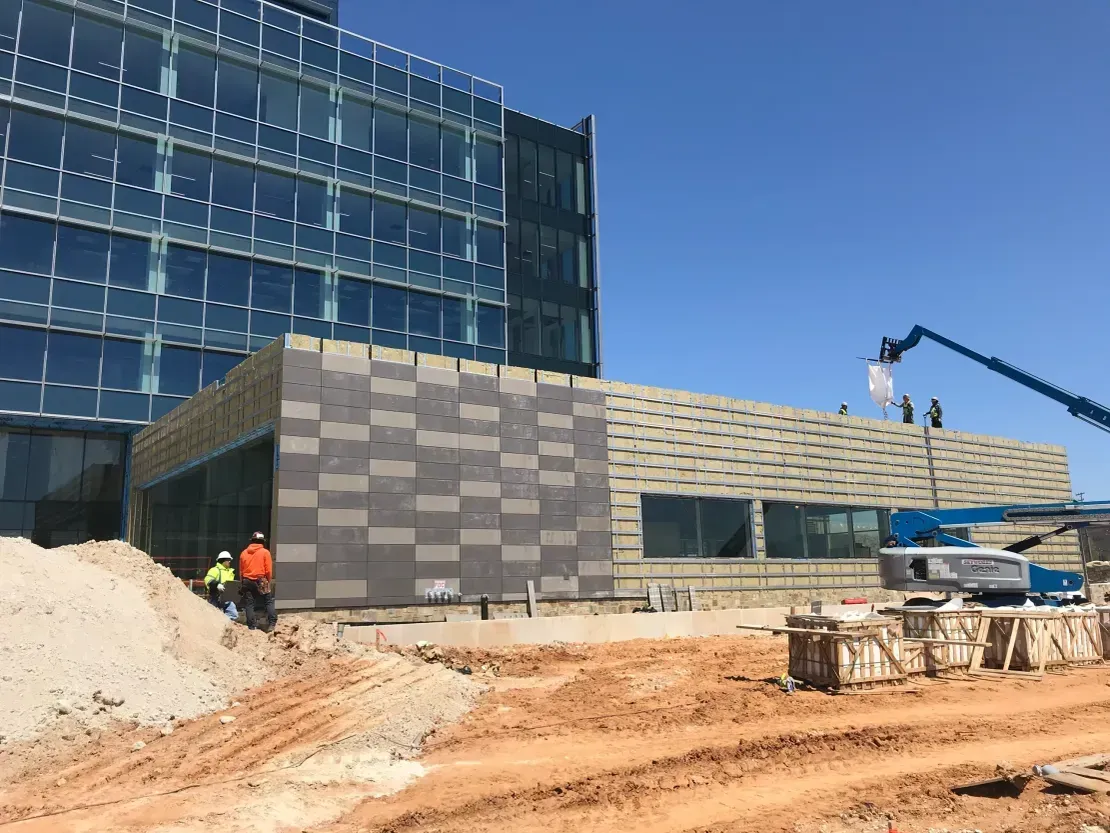
HPL projects
HPL questions
What is HPL cladding made of?
High-pressure laminate is built from layers of cellulose fiber saturated with thermosetting resins, topped with a decorative surface, then cured under high heat and pressure into a dense, solid panel. Exterior-grade HPL adds a weather- and UV-resistant surface so the color and finish hold up outdoors.
Is HPL durable enough for the DMV climate?
Yes. Exterior-grade HPL is engineered for UV exposure, moisture and temperature swings, and it's dimensionally stable through freeze–thaw cycling. As a ventilated rainscreen the panel drains and dries, and its color-stable surface resists fading — a low-maintenance choice for the region.
What finishes does HPL come in?
A broad palette — convincing wood grains, solid colors, stone and metallic looks, and matte or textured surfaces. Because the decorative layer is printed and sealed, HPL offers design variety that's hard to match at its weight and price point.
Why is HPL good for open-joint façades?
It's lightweight, dimensionally stable and easy to fabricate to tight tolerances, so it holds clean reveals and gridded patterns beautifully — exactly what crisp, modern open-joint rainscreen layouts need.
Considering HPL for a DC, Maryland or Virginia project?
Send us the building details and the look you're after — we'll talk through décors, fixing and detailing.