
UHPC Rainscreen Panels in Washington, DC
Ultra-high-performance concrete: thin, exceptionally strong panels with a true mineral surface and the durability to shrug off freeze-thaw and time. We install UHPC as a complete, back-ventilated rainscreen across DC, Maryland and Virginia.
What UHPC is
Ultra-high-performance concrete is a fine-grained, fiber-reinforced cementitious material engineered for extreme strength and density. With far higher compressive and flexural strength than ordinary concrete and very low porosity, it can be cast into thin, large-format panels with crisp edges and a refined, genuinely mineral surface — concrete's honesty without precast's bulk.
That makes UHPC a natural fit for high-rises, civic, cultural and institutional buildings across the DC, Maryland and Virginia area, where architects want the weight and permanence of stone or concrete on a slim, modern rainscreen panel. The low porosity also means excellent resistance to the freeze-thaw cycling that degrades more absorbent materials through a Mid-Atlantic winter.
As with every system we install, the panel is one layer of a coordinated assembly: rear-anchored or face-fixed to a sub-frame over a continuous weather-resistive barrier, a ventilated cavity and continuous insulation that together keep the wall dry and efficient.
How UHPC fits in the wall assembly
The panel is layer one — the visible screen. Hover or tap a number to see what sits behind it.
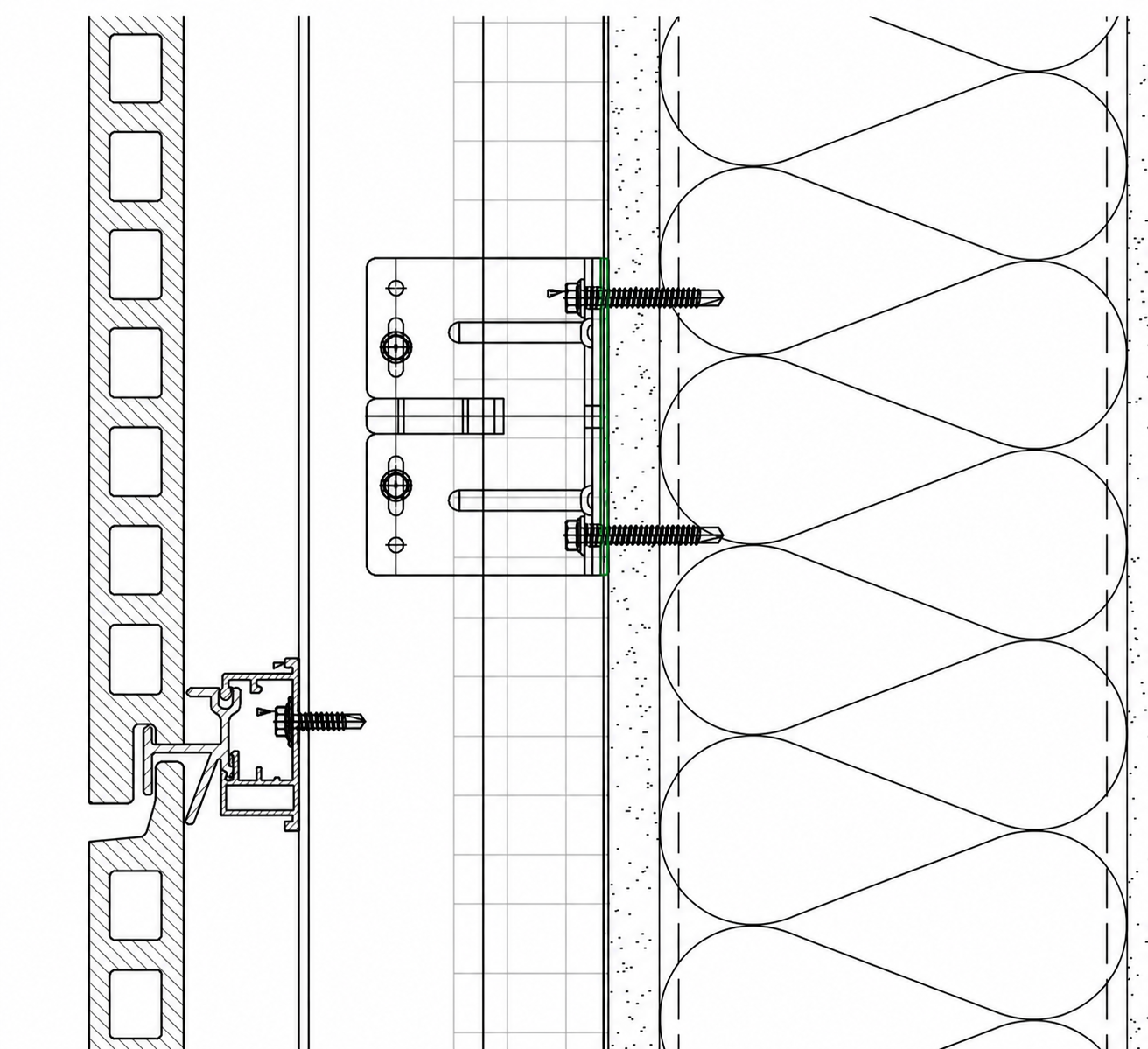
Fig. 01 — UHPC rainscreen assembly
Why specify UHPC
Three reasons architects reach for it on signature buildings.
Thin panels, serious performance
UHPC's strength lets it span as a slim, large-format panel where ordinary concrete would be thick and heavy — a true mineral surface that stays light enough for an efficient rainscreen.
Low porosity, long life
Because it absorbs little water, UHPC resists freeze-thaw, abrasion and weathering through a Mid-Atlantic winter, and it's non-combustible — a cladding measured in decades.
Cast, textured, through-colored
Smooth, sandblasted or relief-cast surfaces and through-body color give architects a concrete language with crisp edges and consistent reveals across the whole façade.
Brands & systems we install
Our installation process
How a UHPC rainscreen goes up — from coordination to closeout.
- Survey & shop drawings
We measure the wall, coordinate with the architect and other trades, and produce panel layouts and anchor detailing for openings, corners and terminations.
- Weather-resistive barrier & flashing
The continuous WRB and all flashings at windows, parapets and penetrations go on first — the line that genuinely keeps water out.
- Continuous insulation & sub-framing
Exterior insulation and the rainscreen sub-frame establish the ventilated, drained cavity at the engineered depth for the panel weight.
- Panel installation
UHPC panels are set to the layout with rear anchors or face fixings, holding consistent reveals and clean joint lines across the elevation.
- Detailing & closeout
Trims, corners and terminations are finished, the cavity ventilation paths are confirmed clear, and the wall is inspected and documented.
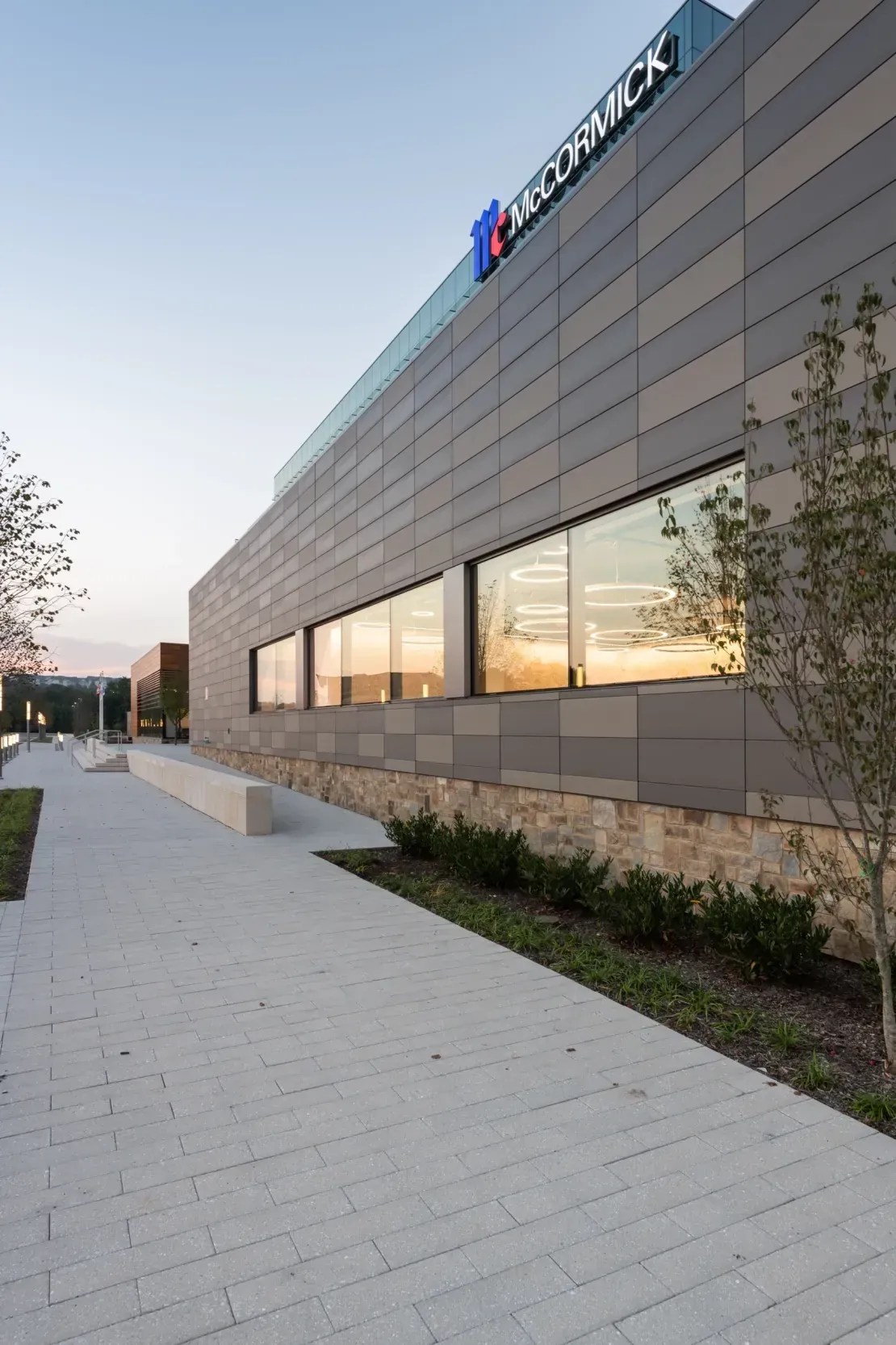
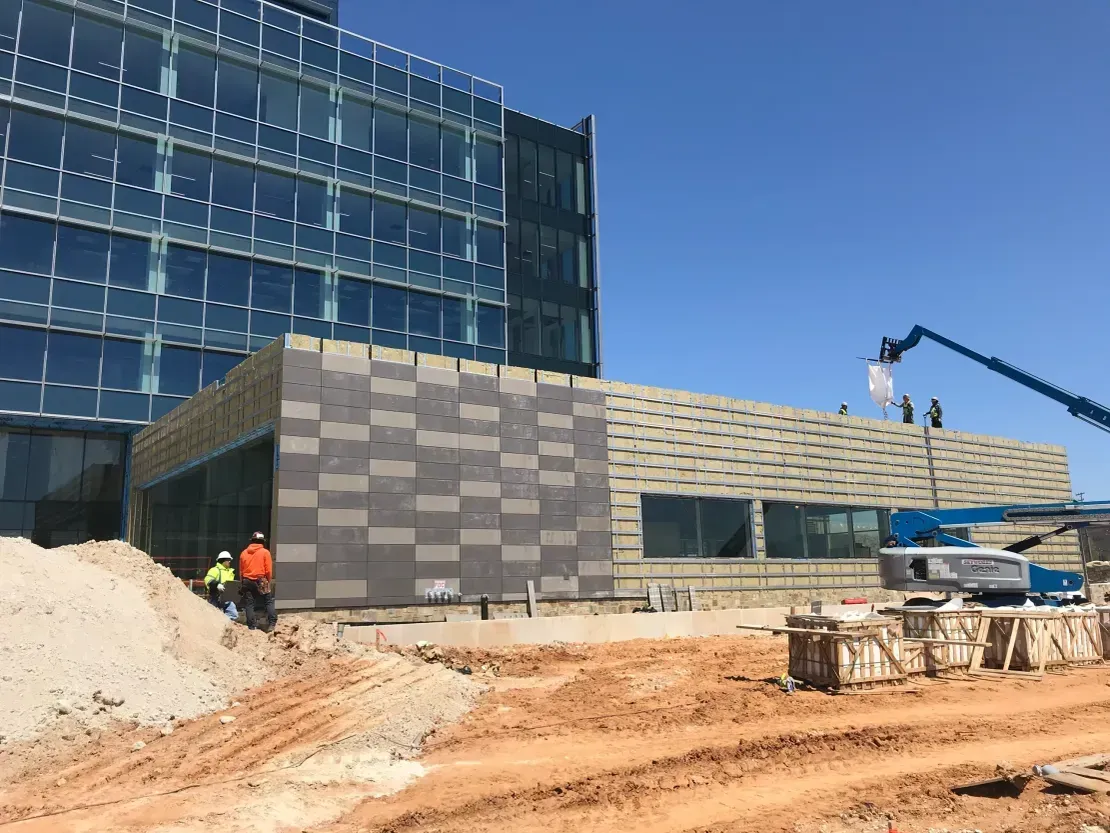
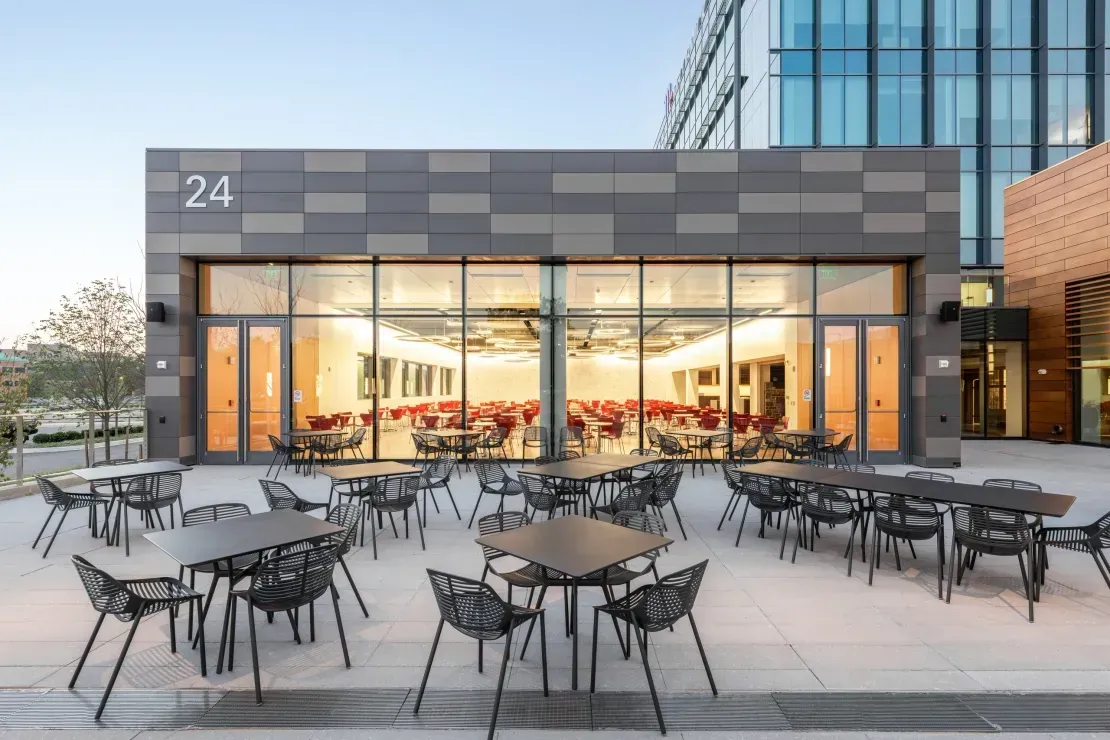
UHPC projects
UHPC questions
How is UHPC different from precast concrete or GFRC?
UHPC uses a fine-grained, fiber-reinforced mix with very low porosity and far higher compressive and flexural strength than conventional precast or GFRC. That strength lets it be cast into thin, large-format panels with crisp edges and a refined mineral surface, where ordinary precast would need to be much thicker and heavier.
Are UHPC panels heavy?
Less than you'd expect. Because UHPC is so strong, panels are cast thin — a fraction of the thickness of traditional concrete cladding — so the rainscreen is meaningfully lighter than solid precast while still reading as a true mineral surface. Panel sizes and anchoring are engineered to each building.
Does it hold up to freeze-thaw in the DMV climate?
Yes. UHPC's very low porosity means it absorbs little water, making it highly resistant to the freeze-thaw cycling that degrades more porous materials through a Mid-Atlantic winter. It's also non-combustible and abrasion-resistant, and the ventilated cavity behind it keeps the assembly drying.
What finishes and colors are available?
UHPC can be through-colored and given a range of surfaces — smooth, lightly textured, sandblasted, or cast with relief and pattern. Because color runs through the panel, edges and reveals stay consistent. We help select the finish, format and joint detailing to suit the architecture.
Considering UHPC for a DC, Maryland or Virginia project?
Send us the building details and the look you're after — we'll talk through panels, anchoring and detailing.